The Virtual Reality Helmet: Gateway to Creative Worlds
The virtual reality helmet is more than a gaming accessory; it's a portal. This headset, a complex fusion of optics, sensors, and software, allows us to step entirely into constructed digital environments. It translates our physical movements into virtual actions, creating an unparalleled sense of immersion. The core interest lies in its ability to dissolve the barrier between user and interface, making the experience not something we watch, but something we inhabit.
Beyond Gaming: A Canvas for Creative Expression
While the VR helmet is synonymous with immersive gaming, its utility for creators is vast. The technology provides a three-dimensional canvas that is interactive and experiential. For designers, it’s a tool for spatial design and prototyping. An architect can walk a client through a building before a single brick is laid. A product designer can test the ergonomics and aesthetics of a new device in a virtual hand. This shifts the creative process from abstract visualization to tangible, experiential review.
For marketers and storytellers, the VR helmet enables narrative immersion. Instead of telling a story, you can place your audience inside it. Brands can craft experiential tours, interactive demonstrations, or emotional journeys that forge deeper connections. An educator can transport students to ancient Rome or the surface of Mars, making learning an active exploration rather than passive reception. The headset becomes a tool for communication that leverages presence and agency.
Adapting the Tool for Diverse Goals and Audiences
The key to effective use of a virtual reality helmet is understanding the audience's comfort and the project's intent. For a broad consumer audience, experiences should prioritize intuitive interaction, clear guidance, and comfort—avoiding complex controls or intense motion. For a specialized professional audience, such as engineers or medical trainees, the experience can demand higher complexity and precision, focusing on accurate simulation and data integration.
The format also adapts. A standalone VR helmet offers accessibility and ease for quick demonstrations or mobile setups. A PC-connected system unlocks higher fidelity for detailed creative projects or high-end gaming attractions. The context defines the approach: a VR experience for a trade show booth needs to be short, impactful, and easy to start; a VR training module for a corporate team needs to be structured, repeatable, and measurable.
Practical Project Ideas and Realistic Applications
Consider these grounded applications of VR helmet technology:
- Interactive Portfolio: A 3D artist or interior designer can build a virtual gallery where clients navigate among their works, examining details from any angle.
- Virtual Prototyping Workshop: Small manufacturing businesses can use VR to collaboratively review and modify product designs with remote team members, saving on physical prototype costs.
- Immersive Brand Experience: A tourism board can create a series of short VR “postcards,” allowing potential visitors to experience a highlight of a destination, like snorkeling over a reef or standing in a historic square.
- Enhanced Remote Learning: Freelance trainers or educators can conduct specialized sessions, such as virtual music lessons where the student sees a 3D visualization of finger positions on an instrument, or safety training where they practice procedures in a risk-free simulated environment.
These ideas start with a clear problem or communication goal and use the VR helmet’s strength—immersion—to solve it.
Ensuring Clarity and Effectiveness in VR Projects
Crafting a successful experience for a VR helmet requires disciplined design. User interface elements within VR must be spatially logical and legible. Overloading the user with information or controls leads to confusion and discomfort. Navigation should feel natural, often using gaze or simple gesture controls. Consistency in visual style and interaction rules throughout the experience is crucial to maintain user orientation and trust.
Keep the audience's physical comfort paramount. Design experiences with minimal forced locomotion if users are new to VR, provide clear exit points, and allow for user-controlled pacing. The goal is engagement, not exhaustion. Originality comes not from simply using VR, but from applying it to a unique problem or crafting a memorable, user-centered journey within it.
The Vector Set: Bridging Digital Design and Physical Perception
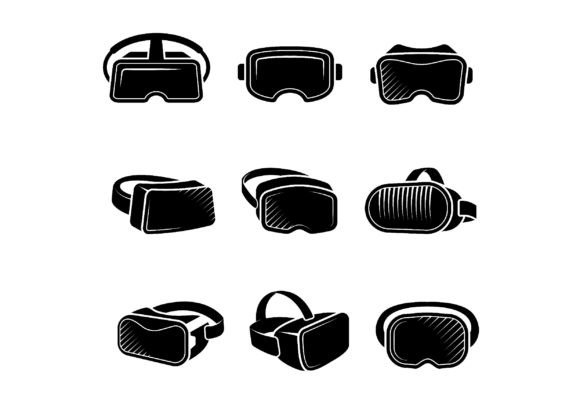
The included vector logo design set for a VR helmet is a tool for bridging concepts. These graphic assets allow designers to visually communicate the idea of virtual reality across media—from website headers to print brochures to app icons. They serve as symbolic shorthand for the technology itself. When using such a set, consider how the logo’s style sets the tone. A sleek, minimalist helmet vector suggests cutting-edge professionalism, suitable for a tech startup. A more dynamic, illustrated helmet with motion lines evokes energy and gaming, perfect for an entertainment attraction.
These vectors can be adapted. Their core elements—the helmet shape, perhaps integrated motion trails or digital motifs—can be recolored, resized, or combined with other graphics to create a cohesive brand identity for a VR-related service, game, or educational platform. They provide a foundation for consistent branding, ensuring that all touchpoints visually reference the central theme of immersive virtual experience.
From Illustration to Functional Inspiration
The VR game illustration, such as the one mentioned, serves as a conceptual springboard. It depicts a potential use case. Analyze such illustrations not just for their aesthetic, but for their implied interaction. What is the user doing in the scene? What environment are they in? What emotions does the imagery convey? This can inspire the mood, setting, and user action for your own project. Perhaps the illustration shows a user exploring a fantastical landscape—this could inspire the development of a VR nature walk for relaxation. Or it might show a competitive scene, sparking ideas for a social VR game structure.
Use these assets as references to maintain a clear creative direction. They help solidify the visual language of your project, ensuring that promotional materials, interface graphics, and the in-VR environment itself feel part of a unified world.
Balancing Inspiration with Pragmatic Steps
The path from inspiration to a real-world VR application involves phased development. Start with a concrete, narrow objective. Instead of “creating a VR experience,” aim for “creating a 5-minute VR tutorial on using our new software interface.” Define the core user actions: look, select, perhaps a simple gesture. Prototype this minimally, using basic shapes and text, and test it early with a VR helmet. Iteration based on user feedback is more valuable than initial perfection.
For those not building the software but utilizing the medium, the same pragmatism applies. If you’re a marketer commissioning a VR experience, define the key message and desired emotional response first. If you’re an educator integrating VR into a curriculum, identify the specific learning objective that immersion uniquely addresses. The virtual reality helmet is a powerful tool, but its power is directed by clear intent and user-centered design.
Ultimately, the virtual reality helmet represents a shift in how we interact with digital content. It moves us from observers to participants. For creators, entrepreneurs, and communicators, it opens a space not just for new kinds of entertainment, but for new forms of design, storytelling, training, and connection. By grounding its use in specific needs and audience understanding, we can build experiences that are not only technologically impressive but genuinely meaningful and effective.